10 Top Herbal Allies for Pregnancy & Postpartum
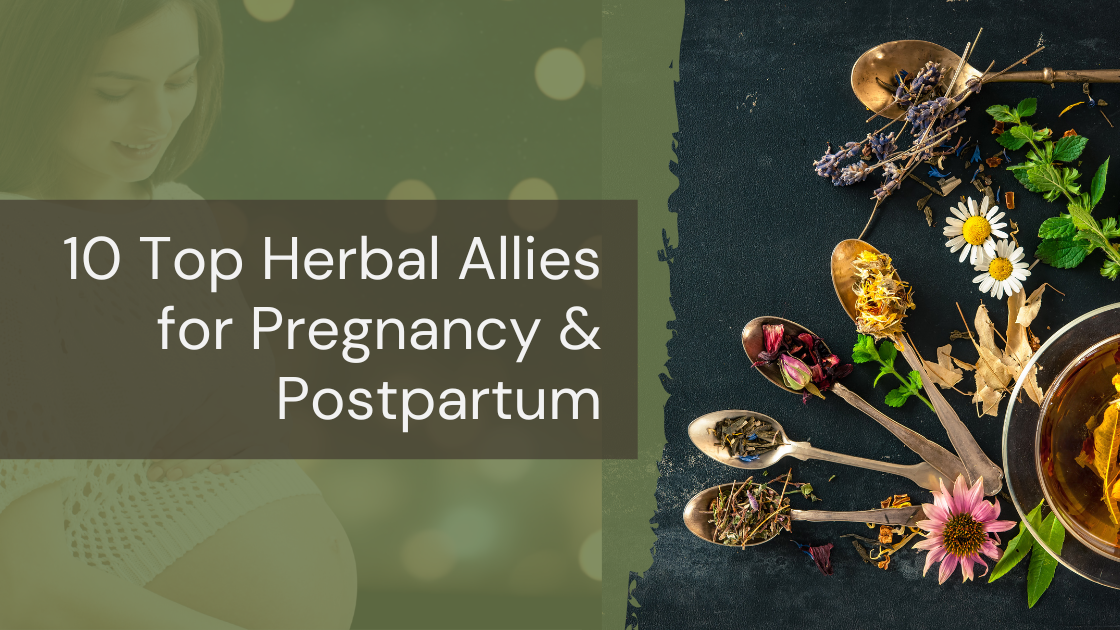
Pregnancy and the postpartum window are times of profound physiological, emotional, and energetic change. Herbs have been used across cultures for centuries to nourish, soothe, restore, and gently support the body during these transitions.
The following herbal allies are commonly used in food-like preparations such as teas, infusions, broths, and culinary spice blends. Chances you already have some of these in your kitchen! Perhaps they are part your every day diet as well as included in some of your prenatal / postnatal supplements such as Floradix.
Herbs have nutritional, medicinal, and energetic value. When used appropriately, as an add-on to your primary nourishment in the form of food – they can offer deep nourishment and comfort during pregnancy and after birth. Pair these herbal remedies with the nutrient-dense items found in a well-stocked postpartum pantry to maximize your healing.
Always consult with a qualified care provider or herbalist before introducing new herbs during pregnancy.
1. Nettle (Urtica dioica)
Nourishing • Mineral-rich • Restorative
Nettle is one of the most beloved nutritive herbs for pregnancy and postpartum. Rich in iron, calcium, magnesium, silica, and trace minerals, it supports blood building, tissue repair, and overall vitality.
Traditional uses include:
Supporting healthy iron levels
Nourishing the nervous system
Supporting postpartum recovery and replenishment
Often enjoyed as a long-steeped infusion, or you can try nettle soup!
✔️ Pregnancy | ✔️ Postpartum/Breastfeeding | ✔️ Motherhood
2. Oatstraw (Avena sativa)
Nervine • Calming • Rebuilding
Oatstraw deeply nourishes the nervous system and is especially supportive during times of stress, fatigue, or emotional depletion. It offers gentle support without sedation.
Traditional uses include:
Supporting lactation, nourishing the body with minerals like calcium, magnesium, and iron, replenishing depleted stores during postpartum
Nourishing the nervous system. Promoting emotional calm. Supporting relaxation and sleep during postpartum
Safe and gentle for long-term use. Often enjoyed as a long-steeped infusion.
✔️ Pregnancy | ✔️ Postpartum/Breastfeeding | ✔️ Motherhood
3. Raspberry Leaf (Rubus idaeus)
Uterine tonic • Strengthening • Balancing
Raspberry leaf has a long history of use as a uterine tonic, especially in pregnancy. It supports uterine tone and overall reproductive wellness.
Traditional uses include:
Supporting uterine strength
Promoting balanced reproductive function
Supporting postpartum uterine recovery
Commonly used in pregnancy teas, (2nd and 3rd trimesters), and in the 4th trimester as well.
✔️ Pregnancy (after 1st trimester) | ✔️ Postpartum/Breastfeeding | ✔️ Motherhood
4. Chamomile (Matricaria chamomilla)
Soothing • Digestive • Calming
Chamomile is a gentle, calming herb that supports digestion, relaxation, and emotional ease. It is widely loved for its mild flavor and broad safety profile.
Traditional uses include:
Calming the nervous system
Soothing anxiety and promoting sleep and relaxation.
Helpful for both parent and baby’s relaxation. Tea infusion.
✔️ Pregnancy (moderate use) | ✔️ Postpartum/Breastfeeding | ✔️ Motherhood
5. Fennel (Foeniculum vulgare)
Digestive • Warming • Carminative
Fennel seed supports digestion and helps relieve gas and bloating. Supports lactation.
Traditional uses include:
Supporting digestion
Easing bloating and gas
Supporting lactation (milk production)
Can be used as a tea infusion or culinary.
✔️ Pregnancy | ✔️ Postpartum/Breastfeeding | ✔️ Motherhood
6. Ginger (Zingiber officinale)
Warming • Circulatory • Anti-nausea
Ginger is a powerful yet gentle ally for digestion and circulation. It is commonly used during pregnancy to ease nausea and postpartum to support warmth and recovery.
Traditional uses include:
Easing nausea
Supporting digestion
Warming the body and promoting circulation
Fresh ginger root is preferred over powdered ginger (less drying). Can be added to congees, soups, teas, extremely versatile!
✔️ Pregnancy | ✔️ Postpartum/Breastfeeding | ✔️ Motherhood
7. Lemon Balm (Melissa officinalis)
Uplifting • Nervine • Antiviral
Lemon balm supports emotional wellbeing while gently calming the nervous system. Its bright, citrusy aroma is especially supportive during times of overwhelm or mood shifts.
Traditional uses include:
Supporting mood and emotional balance
Calming the nervous system
Supporting immune resilience
A beautiful ally for postpartum emotional care. Tea infusion. (It is also a wonderful tea choice for young children).
✔️ Pregnancy | ✔️ Postpartum/Breastfeeding | ✔️ Motherhood
8. Cardamom (Elettaria cardamomum)
Warming • Digestive • Aromatic
Cardamom is a fragrant spice used to support digestion and lactation. It is gentle, warming, and often used in postpartum food traditions.
Traditional uses include:
Supporting digestion
Reducing gas and bloating
Adding warmth and comfort to foods
Often used in teas, porridges, smoothies, and baked goods.
✔️ Pregnancy | ✔️ Postpartum/Breastfeeding | ✔️ Motherhood
9. Jujube (Ziziphus jujuba)
Calming • Blood-nourishing • Tonic
Jujube fruit is rich in antioxidants and is used in Traditional Chinese Medicine to nourish blood, calm the spirit, and support digestive and emotional balance.
Traditional uses include:
Supporting emotional calm
Nourishing blood and energy
Supporting postpartum recovery and digestive health
Commonly used in soups, congees, and teas.
✔️ Pregnancy | ✔️ Postpartum/Breastfeeding | ✔️ Motherhood
10. Goji (Lycium barbarum)
Nourishing • Adaptogenic • Rebuilding
Goji berries are deeply nourishing and traditionally used to support blood, liver, and overall vitality. They are often included in postpartum tonics and foods.
Traditional uses include:
Supporting energy and resilience
Nourishing blood and tissues
Supporting long-term vitality
Used in teas, broths, smoothies, and porridges.
✔️ Pregnancy | ✔️ Postpartum/Breastfeeding | ✔️ Motherhood
For a more personalized approach to your recovery, consider scheduling a consultation through my postpartum care services.
Important Note: Herbs are most supportive when used as companions to your food preparation nourishment. Simple teas, infusions, and food-based preparations are often the most appropriate during pregnancy and postpartum. We recommend introducing one or two new herbs at the time, gradually incorporating into your diet those who appeal to you. Like making new friends - take your time to get to know them, you may become bff! My background in holistic medicine informs every recommendation I share; you can read more about my journey here.
Recommended Book on The Topic:
The Natural Pregnancy Book, Third Edition: Your Complete Guide to a Safe, Organic Pregnancy and Childbirth with Herbs, Nutrition, and Other Holistic Choices by Aviva Jill Romm
Wise Woman Herbal for the Childbearing Year by Susun Weed